Artifact // No. 003
Parametric duffle bag
A duffle bag modelled in Fusion, flattened to DXF, and turned into a pattern generator that drafts every piece from three measurements.
The bag started in Fusion as a sheet-metal body: bend the walls around the bottom, round the top corners, split it where the seams should go, then flatten every face to a DXF. That gave a first set of pattern pieces at one fixed size.
One size wasn't enough, so the geometry moved into code. Length, width and height go in; every piece comes out with its seam line, seam allowance, cutting instructions and the logo, drawn exactly the same way each time.
The pieces
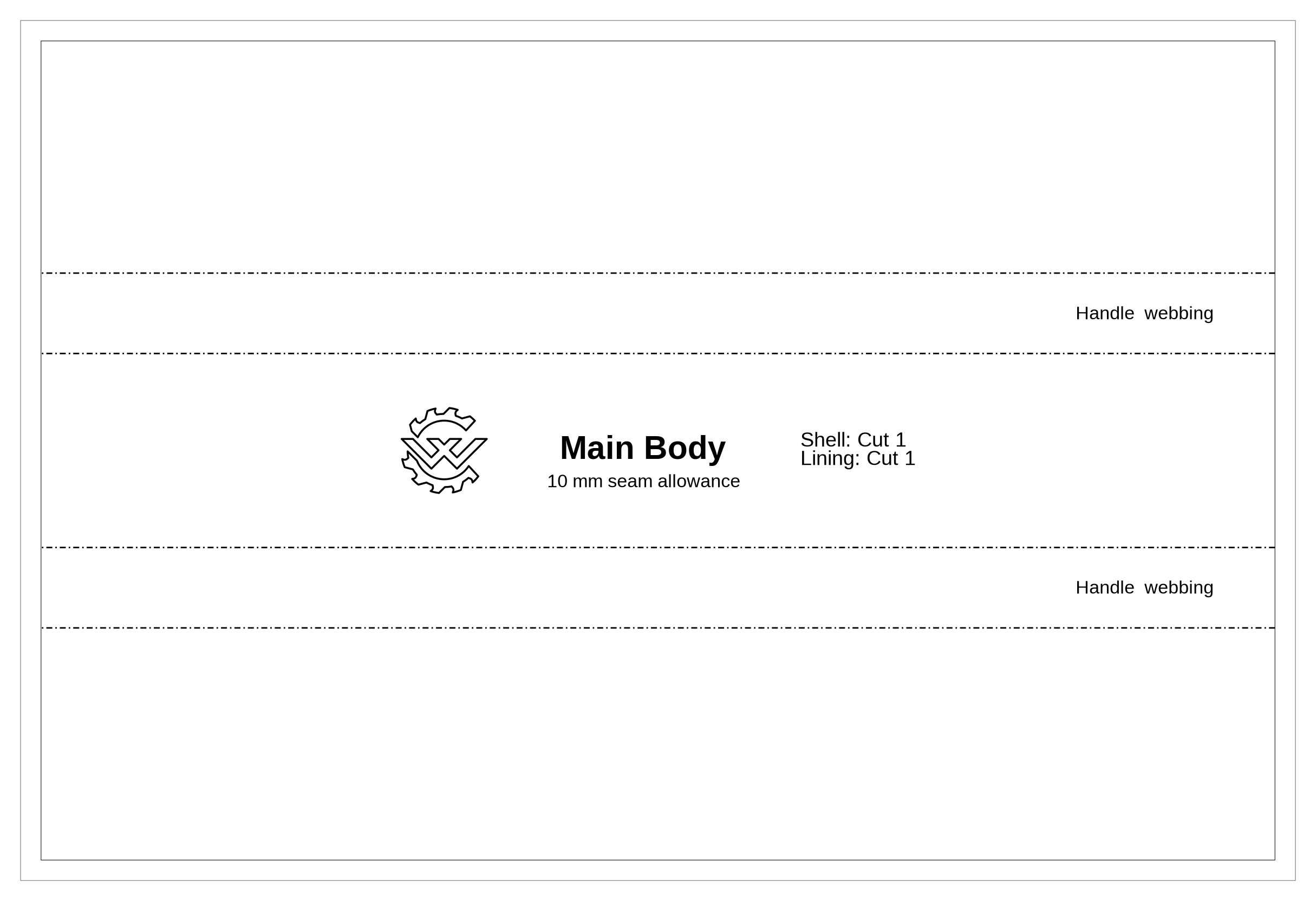
- Main Body: both walls and the bottom in one piece, bent around the bottom radius, with placement marks for the two handle webbings.
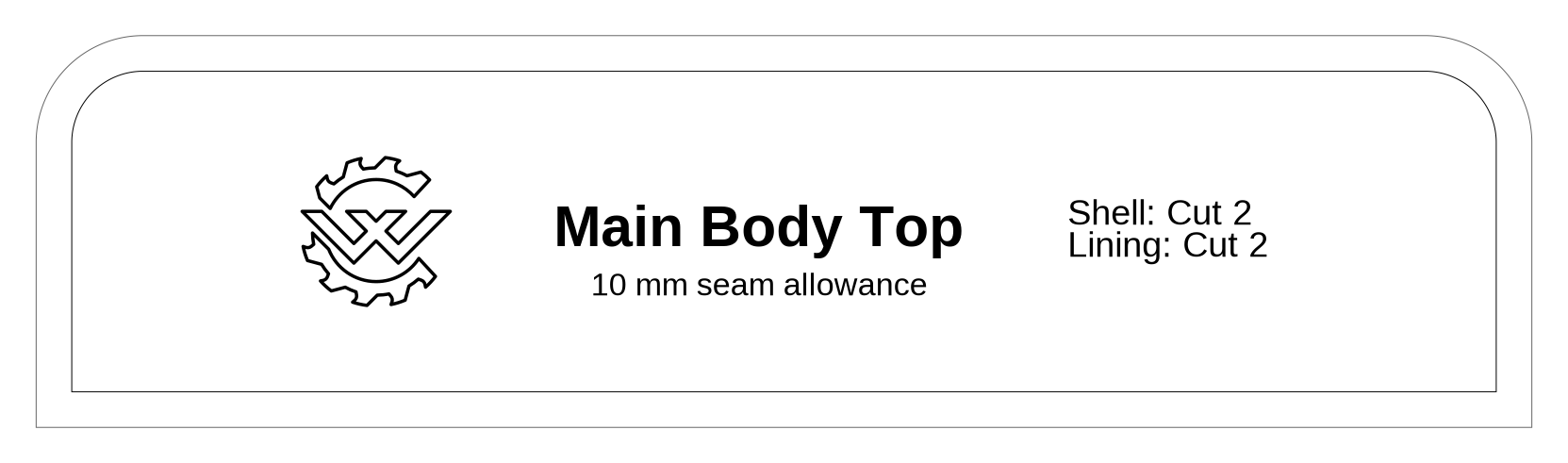
- Main Body Top: the upper part of each side wall, top corners rounded.
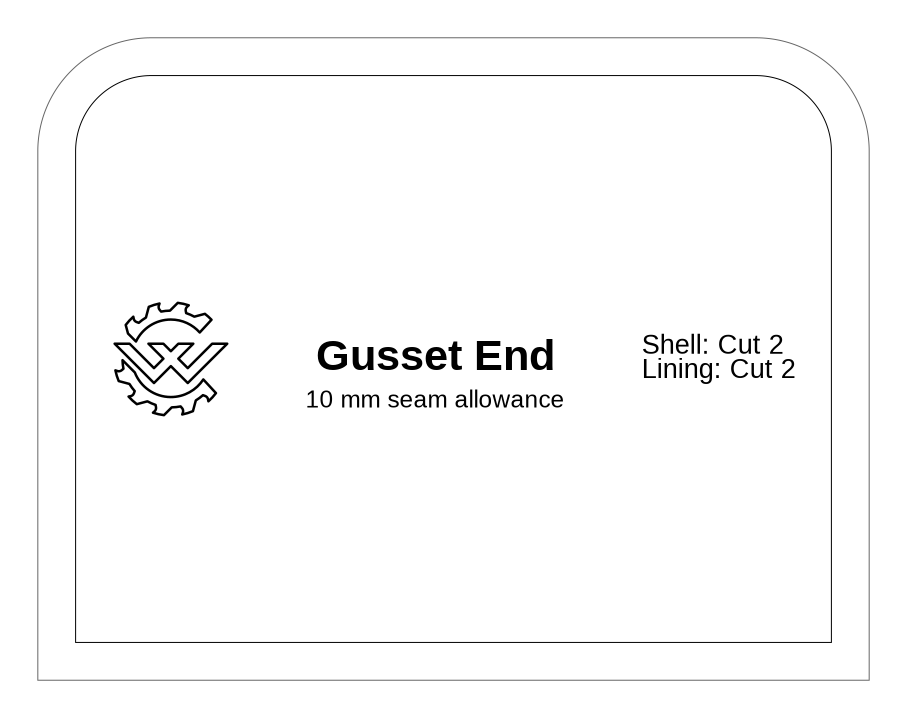
- Gusset End: the lower part of each end.
- Zipper Side: the strip beside the zipper that wraps over the top and down the ends.
- Zipper: a reference strip; it isn't cut.

Things learned
- Fusion flattens with a 1 mm sheet thickness, so the CAD flats come out about 1 mm longer per bend. The generator ignores fabric thickness and draws the true seam lines.
- Only the body-to-gusset seam gets bound. The zipper seams end up hidden under the lining.
- Keeping the output byte-identical for the same input makes it easy to tell when a change actually changed a pattern.
Make your own
The duffle bag pattern tool draws the pattern at any size, works out how much shell and lining fabric to buy, and prints it as a tiled PDF on A4 or Letter.